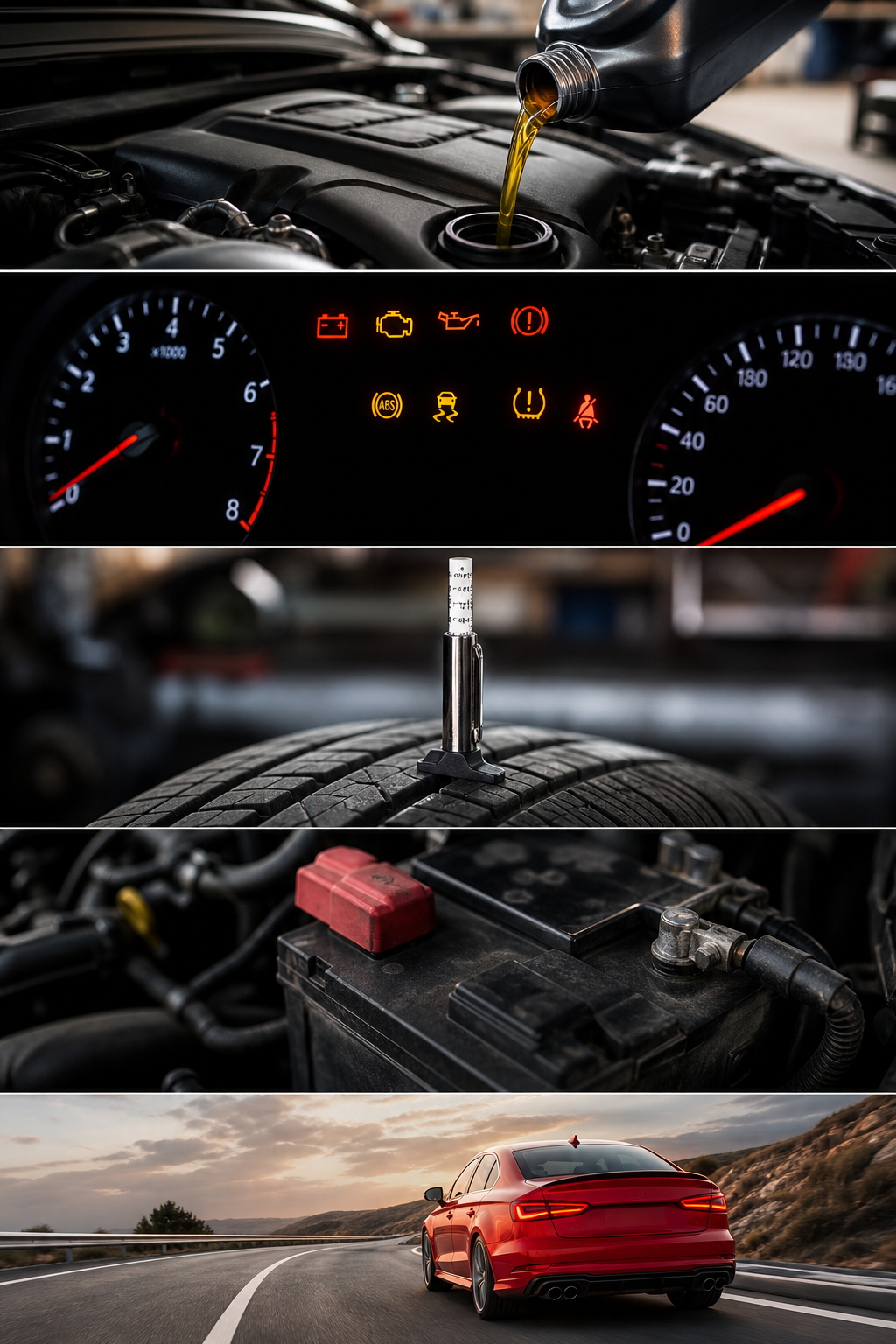
Understanding What Does the Check Engine Light Mean? helps you make calm, informed decisions about car ownership. This guide gives general information for everyday drivers; exact requirements can differ by vehicle, model year, engine and country.
What you should know first
Start with the owner’s manual and the vehicle’s maintenance history. These are the most reliable places to confirm service intervals, warning-light meanings, approved fluids and capacity limits.
Why the details can vary
A similar symptom can have different causes across vehicles. Avoid assuming that a part, fluid or interval used on another car is automatically suitable for yours.
Practical steps to take
- Observe the symptom, warning or maintenance need carefully.
- Check the owner’s manual for the vehicle-specific guidance.
- Record dates, mileage, warning messages and any changes you notice.
- Arrange a qualified inspection when a safety system or serious fault is involved.
Common mistakes to avoid
- Ignoring a warning light because the car still seems to drive normally.
- Using unverified fluid specifications or incorrect replacement parts.
- Delaying routine maintenance until a small concern becomes an expensive repair.
Safety note
Stop driving as soon as it is safe if you see a red or flashing warning, smell burning, notice smoke, lose braking or steering assistance, or the engine overheats. Consult a qualified automotive professional.
Frequently asked questions
Can I use this guide for every car?
No. Use it as general education, then confirm the correct procedure and specification in your owner’s manual.
When should I get professional help?
Seek help for safety-critical warning lights, leaks, electrical faults, overheating, braking concerns or anything you are not confident handling safely.
Related tools and guides
Use the site’s maintenance cost, fuel cost and road-trip budget calculators to plan expenses, and explore related guides before making a maintenance decision.